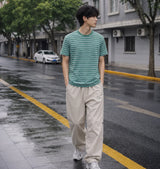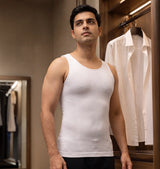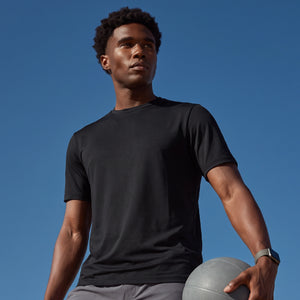

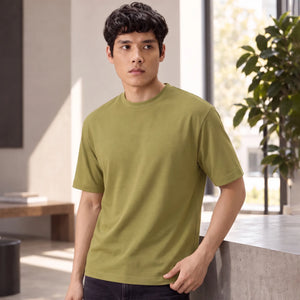



Open a man’s wardrobe on any given day, and you will probably be greeted by a sea of solid colors. Reliable tees that they can wear on any occasion without giving it a second thought.
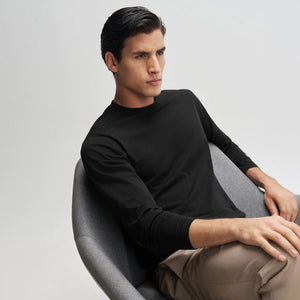
They aren’t bad at all. You will see some good-quality T-shirts. But they will lean heavily towards crisp whites, deep navy shades, neutral grays, and flat blacks as the backbone of their wardrobe. It’s a foolproof formula that leads to effortless efficiency when you’re getting late to head out.
There is a quiet turn that menswear takes every few seasons, though, where it drifts away from predictable minimalism towards something a bit more adventurous - like a pattern that adds a bit of character without shouting for attention.
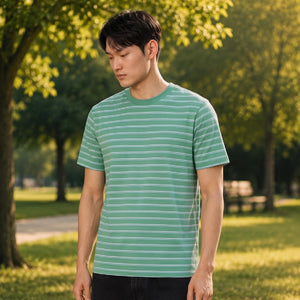
Right now, that shift belongs to the season of stripes.
You can notice them slowly taking over menswear and you probably know someone who has recently discovered them and not sports them regularly. They occupy a space between safe solids and out-there graphic tees. Their relaxed and versatile nature works with everything from everyday roundnecks to polos.
Like we said, solids are “out”. But they’re like the Fixed Deposits of the clothing world- low-risk and low-reward investments. The classic striped tees give your risk appetite a way to safely break out of the monotone rut without going overboard.
The Origin of Stripes in Menswear
Stripes carry a rich, somewhat checkered history in menswear. There was a time when striped patterns were thought to be too chaotic and disruptive to be a part of regular clothing. Eventually, their practical utility made them a favourite of sailors who found them easy to spot from a distance in case of storms, and nautical stripes migrated from there to coastal holiday resorts. There they become a symbol of the relaxed summer leisure that we associate them with now.
You may know them as the pattern often seen in corporate boardrooms where traditional pinstripe suits are still prevalent. Once they became known as this unofficial uniform of high-stakes business people, they lost favour among those looking to dress more casually.
Until modern menswear bridged these two worlds by moving them away from their rigid roots to be incorporated into more casual attire. Today's stripes are more about texture, visual balance, and effortless style. This is what has prompted their comeback.
How Stripes Change Outfit Dynamics
The main reason stripes are reclaiming their lost closet space is that they have a unique ability to alter visual proportions without any extra effort. And unlike their competition, the loud graphic tee or a tee that has a large brand name, they don’t have to become a part of your personality that needs to exit your wardrobe when you move on from it. A well-proportioned striped T-shirt can be worn by anyone.
-
The Illusion of Structure: Horizontal lines can broaden the chest and shoulders visually, giving a cleaner, more athletic look to your relaxed everyday silhouette. This makes them stand out more than plain baggy T-shirts that lack any kind of visual structure.
-
Breaking Monotony: Two solid colours stacked on top of each other can look monotonous, especially when everyone around is wearing the same thing. A small change, like adding stripes, can make you stand out from the rest so you look like you’ve put some extra effort into crafting your look.
-
Built-In Contrast: Instead of relying on an additional accessory to break the flat, monotone blocks of color you’re dressed in, a striped pattern breaks up an outfit organically. This makes layering them easy to layer under overshirts or jackets when you want to accentuate your look.
Personality That Doesn’t Need to Be Loud
Many men hesitate to wear patterns because they are afraid of looking overdressed or messy. T-shirts that have the latest TV show quotes or printed pictures or characters can sometimes feel trend-dependent. Loud abstract prints, on the other hand, are difficult to pair harmoniously with the other pieces in your wardrobe.
Stripes hit the sweet spot because they act almost like a neutral piece of clothing, without being too basic. A classic striped T-shirt or polo pairs just as easily with your favorite casual shorts, Zero Pants, or Cargoes as any solid tee. But it instantly elevates your look from ordinary to thoughtful.
If your wardrobe feels like it has fallen into the same monotone routine we mentioned, reintroducing stripes is the simplest way to shake things up. Skip the effort of a complete closet overhaul and just let the patterns do the heavy lifting for you.
Frequently Asked Questions
1. Do horizontal stripes make you look wider?
This is a common misconception. While wide, poorly spaced stripes can pull the focus towards width, narrower horizontal stripes provide structure and create a broader, more athletic visual.
2. How do you style a striped t-shirt without looking overly casual?
You can pair a striped tee with well-fitted chinos, cargoes, or active track pants. Layer them with an unbuttoned overshirt or a casual jacket to give the outfit a more polished finish.
3. What is the difference between printed stripes and yarn-dyed stripes?
Printed stripes have the pattern stamped onto the surface of the fabric, whereas yarn-dyed stripes weave pre-dyed yarns directly into the textile. This keeps their lines sharp and prevents the stripes from fading over repeated washes.
4. How can men style patterned clothing?
It is usually best to keep stripes as the focal point of your outfit when wearing patterns. Balance a striped top with solid-colored bottoms like dark cargoes, neutral shorts, or chinos so that the patterns don't compete with each other.
5. What should I look for when I’m trying patterned clothing for the first time?
You can’t go wrong with a classic two-tone striped tee, such as navy and white or powder-blue and yellow, with balanced horizontal lines. It’s the most versatile entry point that can easily complement your existing wardrobe staples.