

You're mid-set on the bench press. The guy next to you shifts. Not dramatically, just enough. He angles his face the other way, breathes through his mouth for a second, and carries on. You don't catch anything yourself. And that's the thing about gym odour. You're always the last person to know.
You've showered. You've washed the tee. You even gave it a sniff before leaving the house and it smelled perfectly fine. But somewhere between your second warm-up set and your third, last week's workout showed up uninvited. The tee smells clean when it's cold. The moment your body heats it up, something wakes up.
This isn't about hygiene. It's about what your clothes are holding onto.
You Don't Smell. Your Fabric Does.
Most guys never hear: sweat itself is almost odorless. It's mostly water and salt. The stink only starts when bacteria living on your skin break down the fatty compounds in your sweat into smaller, airborne molecules. Those molecules are what people actually smell when they say gym clothes smell.
Now here's where your fabric makes it worse. Most synthetic workout clothes for men are oleophilic, which means they attract and trap the oily compounds that bacteria feed on. Those oils settle into tiny grooves on the fibre surface. Bacteria follow, embed themselves, and form colonies that survive your next wash cycle. You pull the tee out of the machine, and it smells fine. But the bacteria are still in there, just dormant. The moment your body warms the fabric up again, they reactivate. The smell was never gone. It was waiting.
And if you train in India, the problem multiplies. In cities like Mumbai and Chennai, where humidity regularly crosses 75%, sweat evaporates slower, sits on your skin longer, and gives bacteria more feeding time. Same body, same deodorant, completely different outcome depending on where you train.
This isn't a you problem. It's a climate-meets-fabric problem.
Three "Fixes" That Are Actually Making It Worse
The “Extra-Detergent” Trap
More soap doesn't mean cleaner. Excess detergent leaves a waxy residue on synthetic fibres that seals odour in instead of washing it out. Fabric softener does the same thing. It coats the fibre surface, blocks moisture from escaping, and creates a warm little environment bacteria love. If you've been doubling up on detergent thinking it'll kill the smell, you've been feeding it.
The "Just Air It Out" Myth
Hanging your gym tee on a chair after a session buys you a few hours at best. In Indian humidity, "airing out" is basically slow-drying with extra bacteria. If the fabric itself can't dry fast, exposure to open air doesn't fix anything. It just delays the stink.
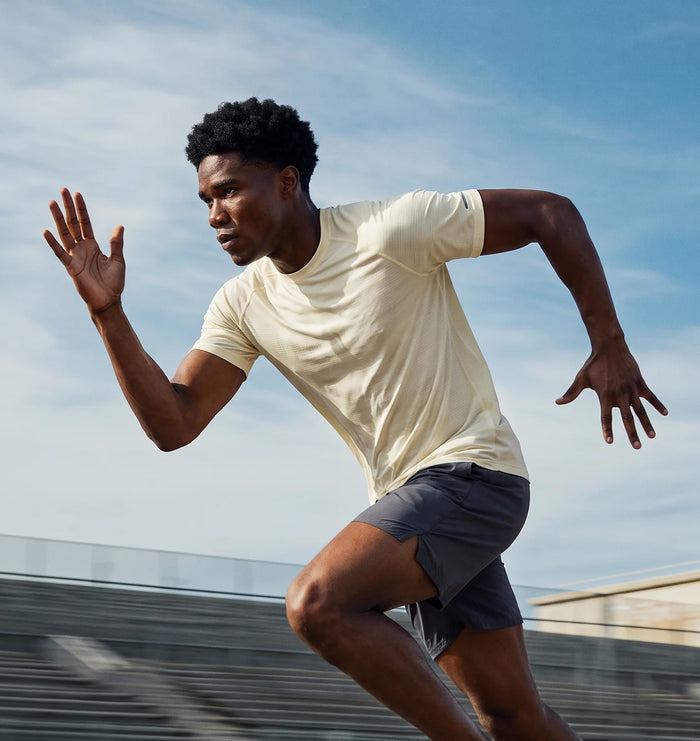
This is where quick dry fabric actually matters. A tee that dries in under 8 minutes doesn't give bacteria the wet environment they need to multiply. The XYXX Quick-Dry Raglan T-Shirt dries in 4.8 minutes, lab-tested by Intertek at 37°C, the temperature of your skin in a Mumbai summer. That's not "faster than cotton." Jacquard knit construction keeps airflow moving through the fabric so moisture doesn't pool against your skin in the first place. And the moisture wicking doesn't wash out. It's built into the fibre structure, pulling sweat away from skin even after 5 washes.
The "Polyester Wicks, So It Should Smell Less" Confusion
Polyester does move moisture off your skin. But it also attracts the oils and sebum bacteria that feed on and hold onto them. Regular polyester t-shirts wick sweat but keep the stuff that actually causes the smell.
The distinction that matters isn't "does it wick?" It's "does the wicking last, and does the fabric let go of what it collects?" Structural moisture wicking fabric, where the moisture management is engineered into the fibre itself, not applied as a spray-on finish, is what separates gym wear that stays fresh from gym wear that collects odour over time.
The XYXX CoolMax Active T-Shirt uses CoolMax® thermoregulating fibres that keep you up to 2°C cooler in heat and adapt when it cools down. It wicks sweat over 15 cm from the skin surface even after 5 wash cycles because the performance is part of the fibre architecture. It dries under 7.6 minutes. Not the same as "polyester that wicks." Not even close.
If your fabric holds onto what bacteria eat, no amount of detergent is going to save you.
How to Actually Wash Gym Clothes (So the Smell Stays Gone)
Better fabric handles half the problem. Better habits handle the rest. Here's how to wash gym clothes so the odour doesn't come back.
-
Wash inside-out. Bacteria accumulate on the inside of your clothes, where skin contact happens. Flipping the garment lets detergent hit the actual source instead of cleaning the outside surface while the inside stays untouched.
-
Skip fabric softener entirely. It coats fibres, traps oils, seals in odour. If you've been using it on activewear, stop today.
-
Don't ball sweaty clothes in your gym bag for hours. A warm, damp, enclosed bag is a bacterial incubator. If you can't wash immediately, spread your clothes out to dry within 30 minutes of your session.
These habits keep your current clothes fresher for longer. But if the smell survives all of this, the fabric has a permanent bacterial colony. At that point, it's not a washing problem. It's a replacement problem.
What Happens Below the Waist (And Why Nobody Talks About It)
Odour isn't just a tee problem. Gym shorts and trackpants sit against warm, high-friction zones: inner thighs, waistband, behind the knees. If the fabric is slow to dry, moisture pools in exactly the creases where bacteria concentrate.
For outdoor training, morning runs, park circuits, weekend cricket, there's an added variable: UV exposure on top of sweat. A damp layer sitting against your skin for the length of a session, with sun accelerating the whole process.
The XYXX Active Training Shorts and XYXX Active Training Trackpants are lab-tested to dry at approximately 4× faster than the regular ones and come with certified UPF 50+ protection, blocking up to ~99% of UV. The 4-way stretch means the fabric moves with squats, lunges, and sprints without bunching into crease points where moisture and odour love to concentrate.
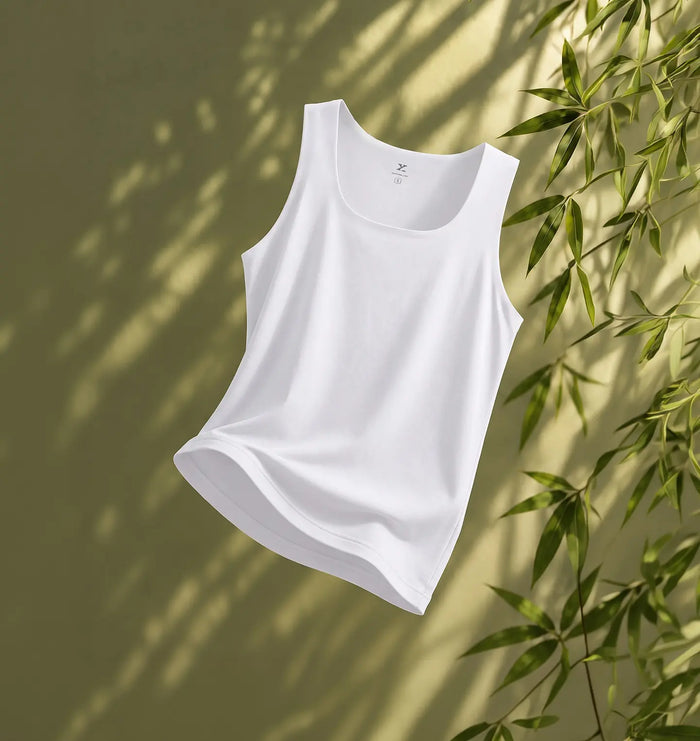
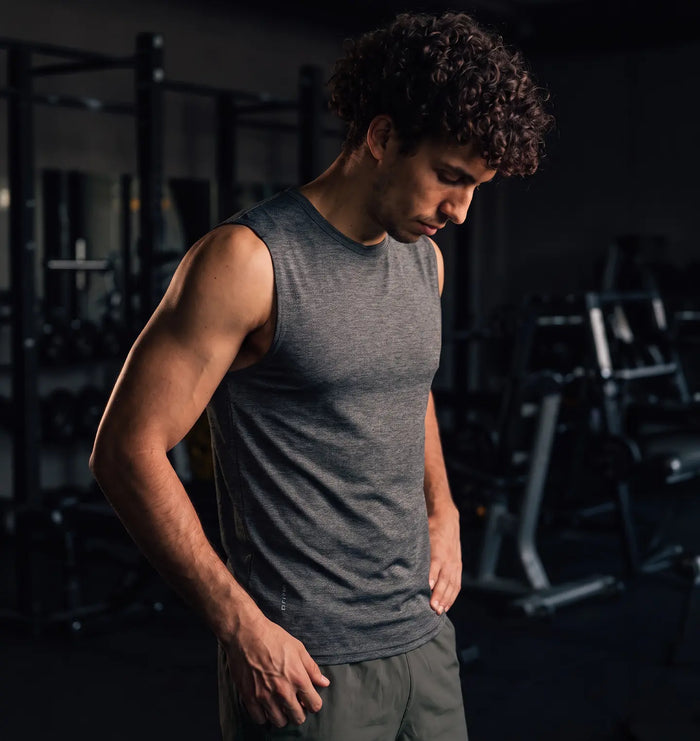
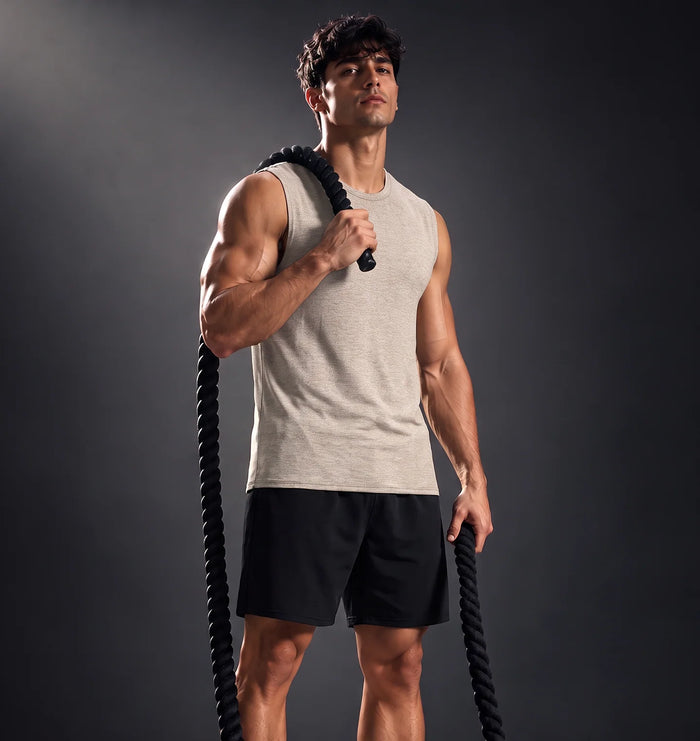
If you train indoors and want maximum airflow up top, the XYXX CoolMax Active Vest pairs naturally with the shorts. Same CoolMax® platform, same structural wicking of over 15 cm after 5 washes, but with wide armholes and open sides for unrestricted ventilation during peak-heat sessions. When your activewear for men dries in minutes and doesn't trap what bacteria feed on, odour simply has nowhere to build.
The less your fabric holds onto, the less you carry around.
The Gym Smell Isn't About You. It Never Was.The Gym Smell Isn't About You. It Never Was.
Three things cause gym clothes to smell: bacteria feeding on trapped oils, fabric that holds onto what it should release, and habits that give both more time to work. Fix the habits, absolutely. But the biggest lever is what you put on before you walk into the gym.
Fabric that dries in minutes instead of hours. Wicking that's structural, not temporary. Construction that lets air move instead of trapping heat. Shop the full XYXX Activewear collection, lab-tested and built for Indian heat.
FAQs
Cotton vs polyester for gym: which smells worse?Cotton vs polyester for gym: which smells worse?
Both have issues, but they smell for different reasons. Cotton absorbs water and stays wet, creating a breeding ground for bacteria. Regular polyester repels water but attracts the oils bacteria feed on, and those oils embed deep into the fibre. Engineered moisture wicking fabrics like CoolMax® manage both sides of the problem. The XYXX CoolMax Active T-Shirt dries under 7.6 minutes and wicks structurally, so sweat doesn't sit and oils don't accumulate.
How fast does a quick-dry t-shirt actually dry?
A quick-dry t-shirt can dry in just a few minutes, depending on the fabric and technology. The XYXX Quick-Dry Raglan t-shirt is lab-tested to dry in just 4.8 minutes, while the coolmax active tee dries in under 7.6 minutes, helping you stay fresh through every training session.
What's the best fabric for workout clothes that don't smell?What's the best fabric for workout clothes that don't smell?
Look for structural moisture wicking fabric with a dry time under 8 minutes. Nylon-spandex blends and CoolMax® polyester outperform regular polyester and cotton for odour resistance. Check out XYXX quick-dry active t-shirt and coolmax active tees.
How do I wash quick-dry and CoolMax fabrics?
Follow the care instructions on the garment label. Proper care helps maintain the fabric's quick-dry performance, stretch, shape retention, and durability through repeated washes.
Is XYXX activewear good for hot and humid weather?Is XYXX activewear good for hot and humid weather?
XYXX activewear is lab tested at 37°C under controlled laboratory testing for real life performance. The CoolMax Active T-Shirt keeps you up to 2°C cooler through thermoregulating fibres. The Quick-Dry Active T-Shirt dries in 4.8 minutes. All claims are lab-tested and verified by Intertek, not estimated in-house. The range is built for Indian heat specifically, not adapted from a global template.