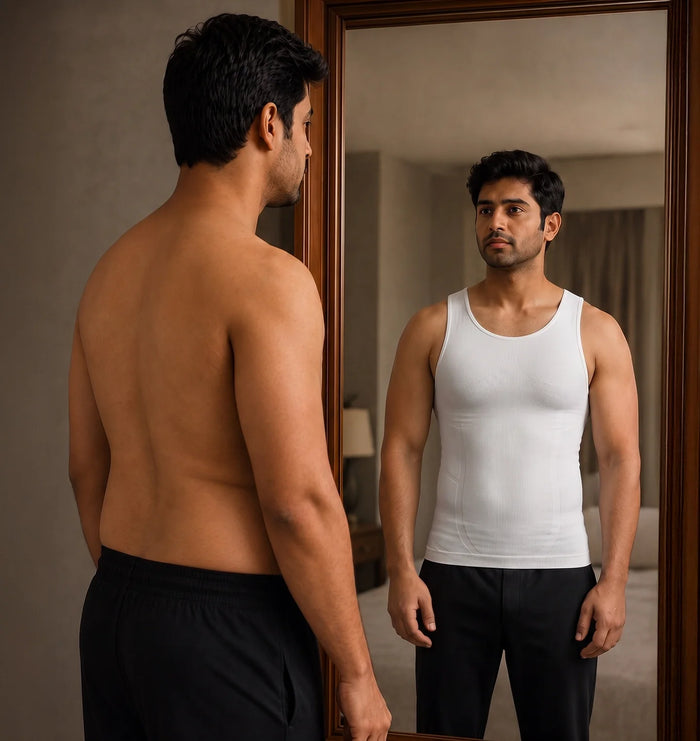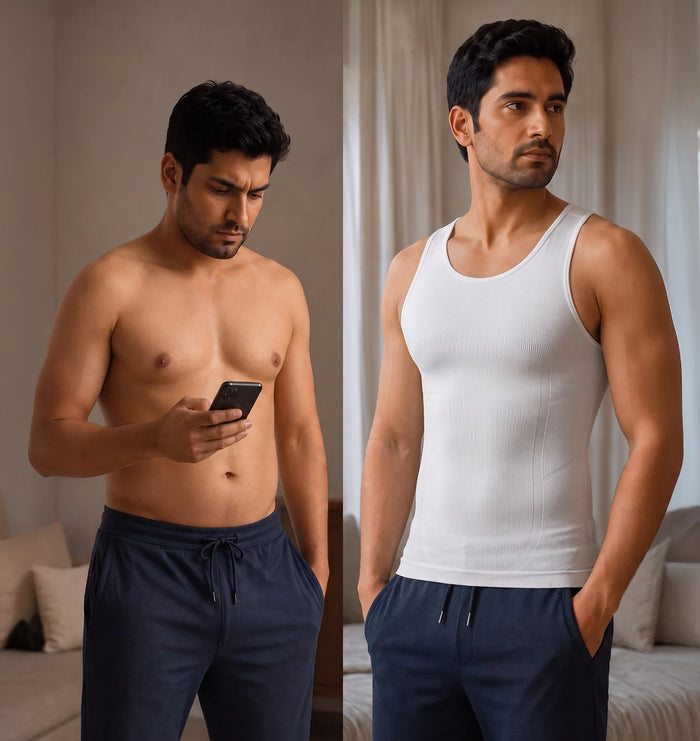



A few years ago, I tried on my tailored suit for a wedding, and I had to really pull my stomach in to get the buttons on. As embarrassing as it was, I didn't get it altered or buy a new one because I didn’t have the time, and I wasn’t ready to admit how much I had let myself go. I told myself it was a one-event problem; the easy fix was to get a compression vest for now and a gym membership for later.
What I bought was the first result in my search. Cheap, generic, and built for the gym.
I wore it to a wedding in October, which in Mumbai is a second punishing summer. Forty minutes in, the compression vest for men had turned into something of a liability. The sweat had nowhere to go, so it pooled and leaked through my suit. It was a miserable experience, and I wouldn’t wish this even on my worst enemy.
What Shapewear Actually Does, and What It Doesn't
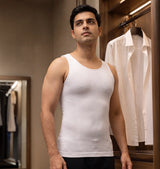
A compression vest's primary job is to smooth your silhouette under clothing. While it’s not a substitute for the gym and won't change your body composition, what you buy shouldn’t feel like punishment.
So, after years of trying everything on the market. I’m here to tell you what to look for and what you should expect from a good compression Vest
The Indian Weather Problem Nobody Warns You About
Here's what I didn't know when I walked in. Most of what's sold as men's shapewear is designed for one of two very different men: someone recovering from surgery who needs medical-grade compression, or someone training hard who needs a gym vest for a workout. The average consumer looking for an everyday compression vest isn't that.
Second, compression fabric has to be able to either support or compress. I’ll walk you through the difference. Tightness and silhouette changes are not the same as medical-grade compression. Because they don’t offer the same amount of breathability and usability in Indian weather
This isn't a flaw in you. It's a blind spot in the category.
What to Actually Check Before You Buy
A few things I now check before buying anything in this category, learned mostly the hard way.
Fabric composition, not just the word "compression.": Check what the vest is actually made of, not just how firm it claims to be. Nylon-heavy blends with too little spandex tend to feel stiff and trap heat. The ratio matters more than the marketing copy around it.
Support versus compression: These get sold like the same thing. Compression squeezes. Support is for posture and comfort. A full workday needs medium compression that can survive an eight-hour day.
Wear time you're honest about: The material composition and construction dictate this. So make sure you’re reading the fine print before buying anything.
Don't size down: Tighter isn't more effective. It's digging waistbands and a vest that rolls by the time you need it to behave. Size for your actual body.
Where XYXX Comes In
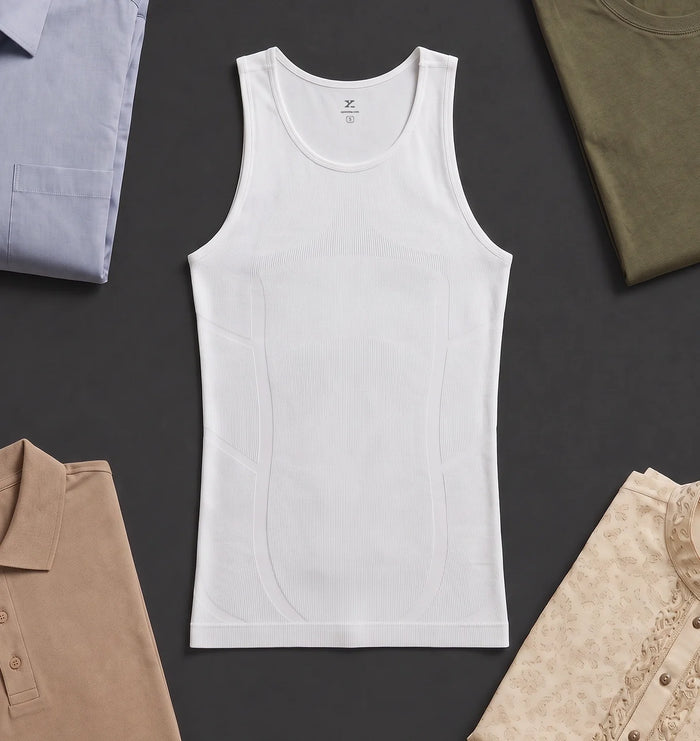
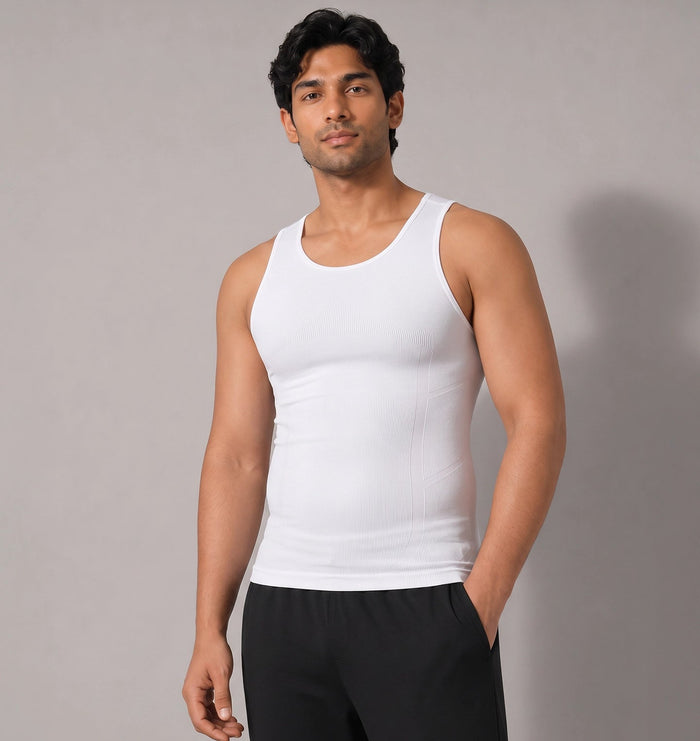
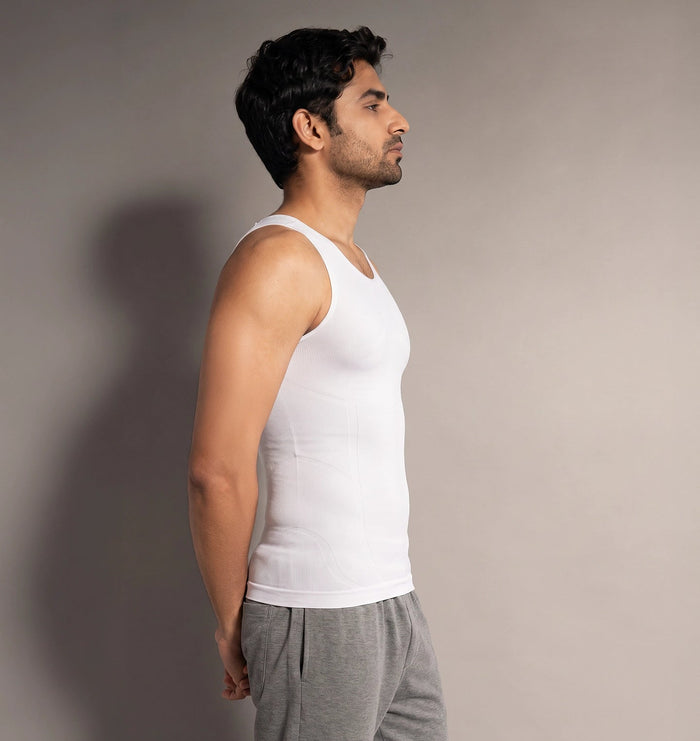
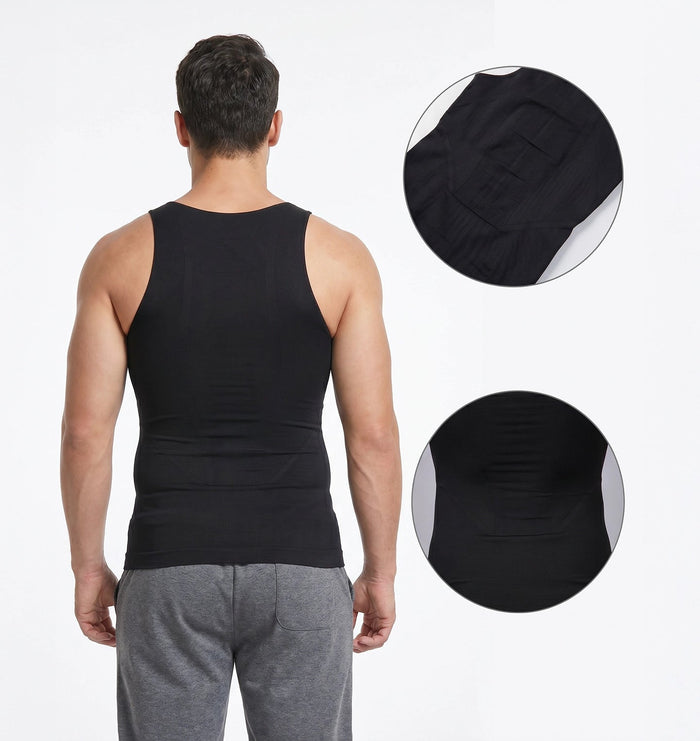
I've worn through enough of the available options to know the bar: smoothing that doesn't cost you in sweat and skin irritation by the time the day's half done. That's the gap XYXX is building with the Sculpt Shapewear Vest.
The fabric is 85% nylon and 15% spandex. It's what gives the fabric stretch and recovery instead of just stretch, the difference between fabric that moves with you and fabric that gives up and stays stretched out. It's also built on a non-uniform rib structure: finer ribs at the chest, stomach, and obliques for stronger compression where you want it, and wider ribs everywhere else so the rest of the vest just stays out of your way. The vest isn't squeezing you evenly. It's squeezing where it needs to.
What that adds up to, worn through an actual day, is the thing I was after all along without knowing how to ask for it. You sit through a long dinner and realise an hour in that you haven't adjusted anything, haven't checked. The fabric dries fast enough that the wedding-in-October problem stops being a given. You just exist in the shirt, feeling confident in your choices and great about how you’ll look in the photos.
I keep my compression vests for the days when they're needed now. The days I’m not feeling great about myself. The days when the little excess flab is grating. It's reserved for the days I want to feel good about what I’ll be wearing. I’m not wearing this as a substitute for the gym or a good diet. I know what it is and what it is not.
This blog is here to make sure you do too.
FAQs
What's the difference between light, medium, and firm compression?
Light compression offers subtle smoothing with minimal restriction, suited to all-day wear. Medium offers a more noticeable silhouette change while remaining reasonably comfortable for extended wear. Firm offers the most shaping but is best reserved for shorter durations, such as a single event.
How many hours can I wear a compression vest in a day?
Most guidance recommends a maximum of 6 to 8 hours of continuous wear, since longer wear can trap heat and moisture against the skin.
Can I wear shapewear every day?
You can, but it isn't necessary for most people. It's most useful for specific occasions or fitted outfits rather than daily wear.
Does shapewear help with weight loss?
No. It temporarily changes how your silhouette looks under clothing and has no effect on body composition, which responds only to diet and exercise.
What fabric should I look for in India's climate?
Blends that prioritise breathability alongside compression, rather than firmness alone. Fully synthetic, high-compression fabrics tend to trap heat and moisture, which is especially uncomfortable in humid conditions.