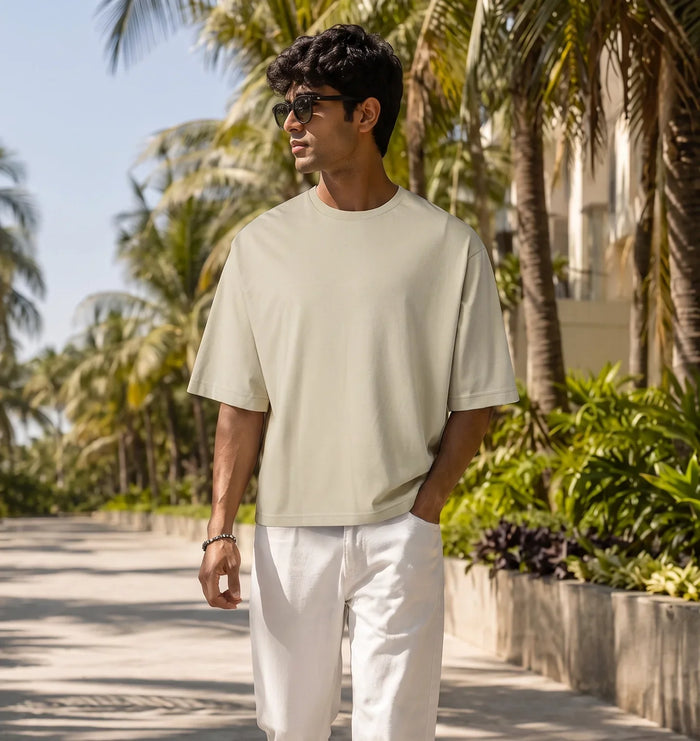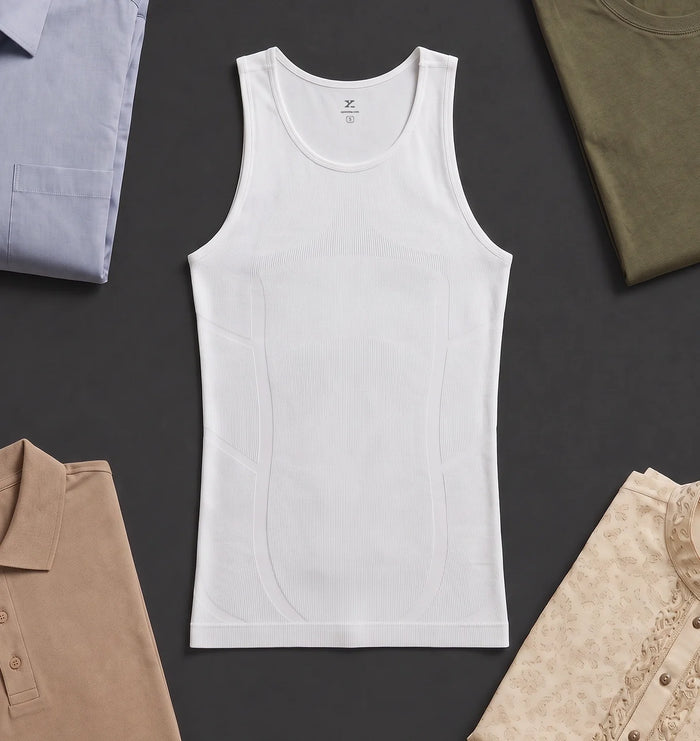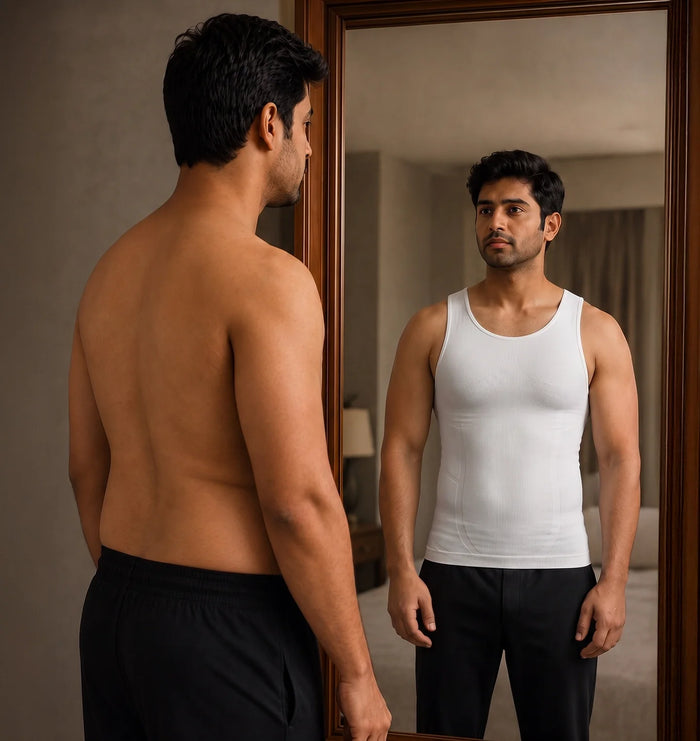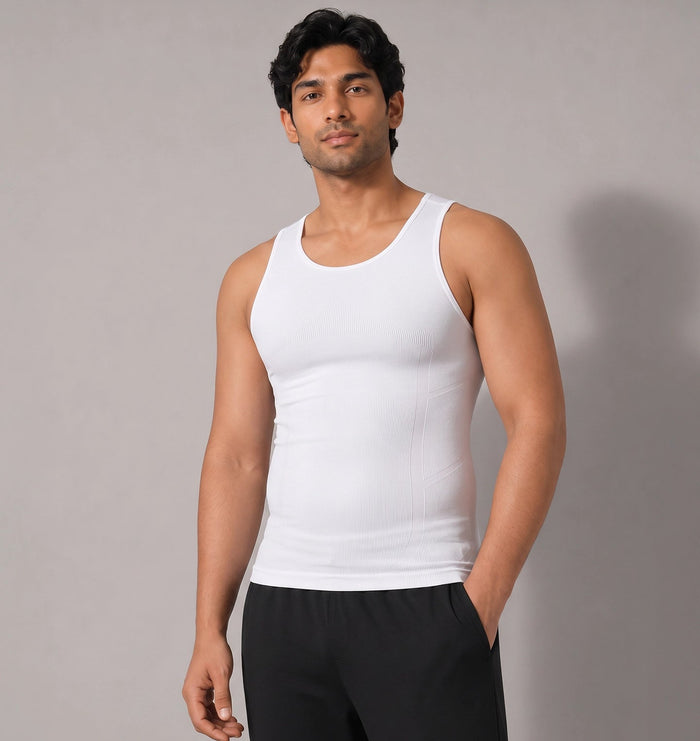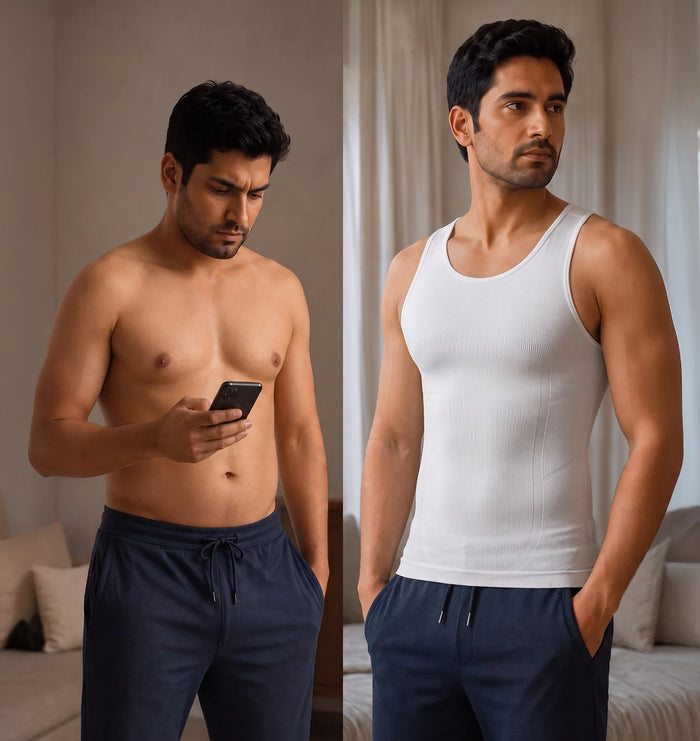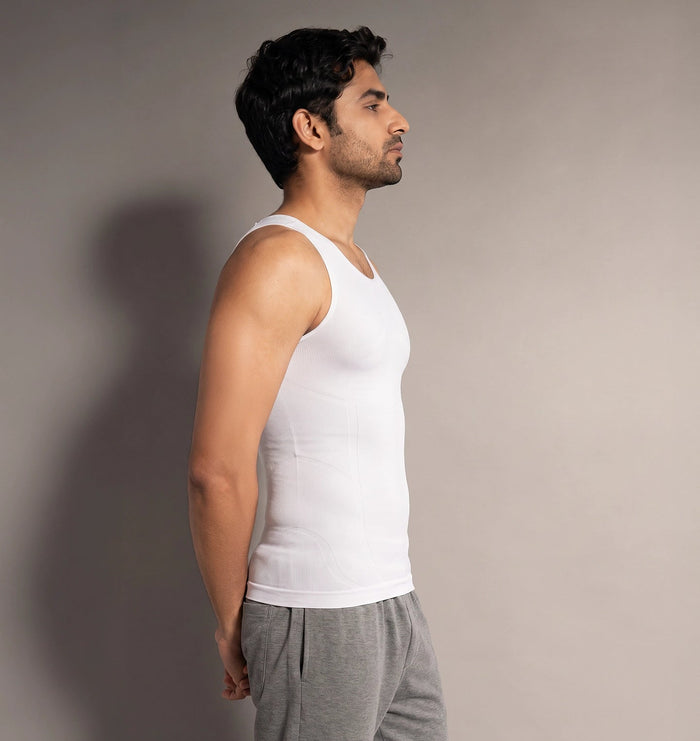



The first T-shirt that genuinely changed something in me was a medium-sized Giordano, bought at a mall, with my own pocket money, I might add. I remember gingerly picking it up the way you pick up something you're terrified to break and carefully, with one hand, running my fingers across the t-shirt. There was a softness to it I hadn't encountered in anything I owned, which, at the time, wasn’t saying much because most of what I owned were Tantra tees from Fashion Street that had the structural integrity of a wet tissue and felt like sandpaper.
I wore that Giordano T-shirt almost every day and for almost any occasion, including my first ever date with a real human woman.
While my Tantra tees were quietly disintegrating, the Giordano T-shirt just kept going, wash after wash, year after year, same shape, same feel. Owning that one shirt made me feel like I was made for the finer things in life.
Regular T-shirts started feeling wrong on my skin. Every stray fiber causes an inconvenient itch. Mind you, the label on all these T-shirts read 100% pure cotton, by the way.
That was my first education.
The second education came later, when I started buying T-shirts online and discovered that every brand, without exception, is ‘premium’. The words Soft, Breathable, long-lasting, and 100% pure cotton were everywhere and lost all meaning after a while, because by themselves, those words mean absolutely nothing, because it tells you almost nothing useful. It doesn't tell you which cotton. It doesn't tell you how it was processed, how long the fibres are, or why it costs what it costs.
What the Label Isn't Telling You
Here is what I didn't know, and what most product pages don't volunteer: not all cotton is the same, and the differences aren't subtle.
Standard cotton has relatively short fibres. When those short fibres are spun into yarn, the ends stick out and cause that slightly fuzzy deterioration that makes a T-shirt look like it has hair growing out of it. Short fibers also lead to a looser weave, so the t-shirt loses its structure after a few washes and the neck starts to droop. Then there’s the issue with the colour, which bleeds or loses its punch by the end of the season.
This is the case even if the T-shirt is 100% pure cotton.
Long-staple cotton is a different proposition. Longer fibres spun into a finer, smoother yarn, which means a cleaner outer layer. The fabric holds its weave under stress and stays softer for longer when you run your hands over it. Supima cotton, which ranks among the top 1% of cotton grown globally, has some of the longest staple fibers of any commercially grown cotton. The XYXX Supima T-shirt and Supima Polo are four times softer and twice as durable as standard cotton. Four times softer isn't a claim. It's a byproduct of quality cotton.
Then we need to talk about combing, which is the process of running cotton through fine-toothed rollers before spinning to remove short fibres and impurities.
So, combed cotton produces a cleaner, stronger, more uniform yarn. Most genuinely premium T-shirts use it. So look out for that.
Now you must be thinking, but Umaire, shouldn’t I just buy the thickest T-shirt so it lasts the longest?
No. Not necessarily.
This is where we look at the GSM, or grams per square meter, which is the fabric's weight and one of the more honest numbers a product page can give you. A T-shirt in the 180-220 GSM range has enough structure to drape properly without going transparent in sunlight or pulling at the shoulders after a few washes. The XYXX Supima T-shirt sits at 210 GSM, which is why it falls the way it does on the body. Below 150 GSM, and the fabric is working very hard to feel like a T-shirt, let alone a premium T-shirt.
Colour retention is one of the tougher things to verify, unfortunately. Look for high IQ dyes and pre-shrunk construction. The pre-shrunk treatment is usually a good indicator of the shirt's real size.
How I Actually Buy T-Shirts Now
After a lifetime of buying T-shirts, I’ve come to realize that a premium T-shirt or the word premium in general can mean many things. What’s more important is the use case for where I’m wearing the premium T-shirt. Premium doesn't automatically mean expensive across the board. It means knowing what job the T-shirt is meant to do and buying accordingly.
For outside, something I'm wearing to work or out, or anywhere that involves other people forming opinions, I spend time on. I read the full product description and look past the buzzwords. "Soft" means nothing. "Supima cotton" means something. "Long-staple fibres" means something. "100% pure cotton" with nothing else means almost nothing. I check whether the brand specifies GSM, how the fabric was treated, and whether there's a return policy. That last one matters because even with all the right language on the page, fit and feel are still personal, and a brand confident enough in their product to offer returns entails a bit of trust in me.
The XYXX Supima T-shirt and Supima Polo are the definition of a premium T-shirt for me. The cotton claims are verifiable, the 210 GSM is specific, and the pre-shrunk fabric is the kind of detail that matters after four months of regular use.
For home, I'm still buying decent-quality, usually anything around 180 GSM. I’ll pair the home T-shirt with the XYXX Chambray Pyjamas because I like to extend the premium cotton experience to my pyjamas too.
And then there's the XYXX Modal Underwear. Nobody sees it. I buy it purely because, as I said earlier, I was made for the finer things in life.
I read product descriptions properly now. All of them. I look past the buzzwords, I check the GSM, I make sure there's a return policy, and I think about what the T-shirt is actually for before I add it to the cart.
Takes about ten minutes. My skin hasn't complained since.
FAQs
What makes Supima cotton different from regular cotton in a T-shirt?
Supima cotton comes from the top 1% of cotton grown globally and has significantly longer staple fibres than standard cotton. Longer fibres produce a finer, smoother yarn that pills less, holds its shape longer, and is four times softer and twice as durable as regular fabric across repeated washes.
What GSM should I look for when buying a T-shirt online? A T-shirt between 180 and 220 GSM offers the right balance of structure and breathability for daily wear. The XYXX Supima T-shirt is crafted at 210 GSM, giving it enough weight to drape properly without feeling heavy or thinning over time.
Why does "100% cotton" on a product page tell you so little? The label confirms the material but says nothing about fibre length, processing method, or durability. Two T-shirts can both be 100% cotton and perform completely differently depending on whether the cotton is standard short-staple or long-staple Supima, and whether it has been combed, dyed properly, and pre-shrunk.
How do I know if a T-shirt will keep its colour after washing?
Look for garments finished with high-quality dyes and pre-shrunk fabric.
What is the difference between the XYXX Supima T-shirt and the Supima Polo?
Both use the same Supima cotton construction with identical fabric quality and colour retention. The Supima Polo adds a ribbed collar, classic two-button placket, and side slits for mobility, making it the better choice for settings where a T-shirt reads too casual but a full collar reads too formal.
Read Next
The Myth of 100% Cotton: Why It Doesn't Always Mean Comfort
The Polo's Second Act: How Full-Sleeve Polos Became the New Smart-Casual Staple