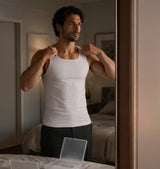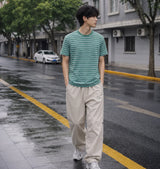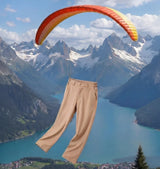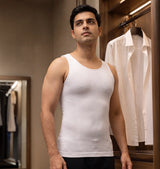



Last summer, I got lucky. My company sent me to Milan for a conference, and for four days I walked around a city where every man on the street looked like he'd wandered out of a magazine shoot and forgotten to go back. Linen trousers that fell in a clean line from hip to ankle. Hair that would have held shape even in a category 3 hurricane.
I am, as my mother likes to remind anyone who'll listen, an enterprising man. So I asked around. I took notes. I came home with a classy pair of high-twist cotton trousers and a tin of wax pomade, feeling like an honorary Milanese.
Mumbai took roughly eighteen hours to correct the record.
The morning I became Indian Superman
I left home looking like I'd understood something about life. I reached the office looking like I'd just gotten the beating of my life. The pomade had migrated south and was now decorating my XYXX striped polo collar. My face had been sand-blasted by the particular cocktail of construction dust and diesel exhaust that Mumbai serves for breakfast. And the sweat — the sweat had pooled in a patch around my crotch, almost comical, that I briefly considered a career as Indian Superman.
The high-twist cotton wasn't the villain. It's a beautiful fabric. It just wasn't built for me.
Why Milan's answers don't translate
Milan in summer is dry. Mediterranean heat burns, but it doesn't cling. Linen and high-twist cotton work there because they let sweat evaporate into thin, polite air. The fabric breathes because the air will cooperate.
Mumbai air does not cooperate. At 85% humidity, evaporation doesn't happen; it’s a hypothetical concept you hear the Europeans talk about. Traditional summer fabric that absorbs moisture in this city doesn't release it; it wears it. Linen wrinkles into origami before you've reached the lift.
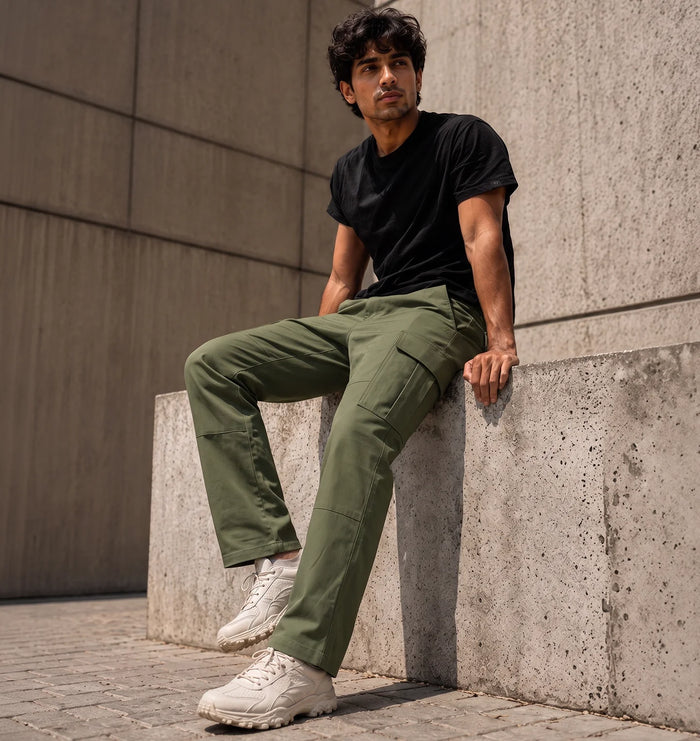
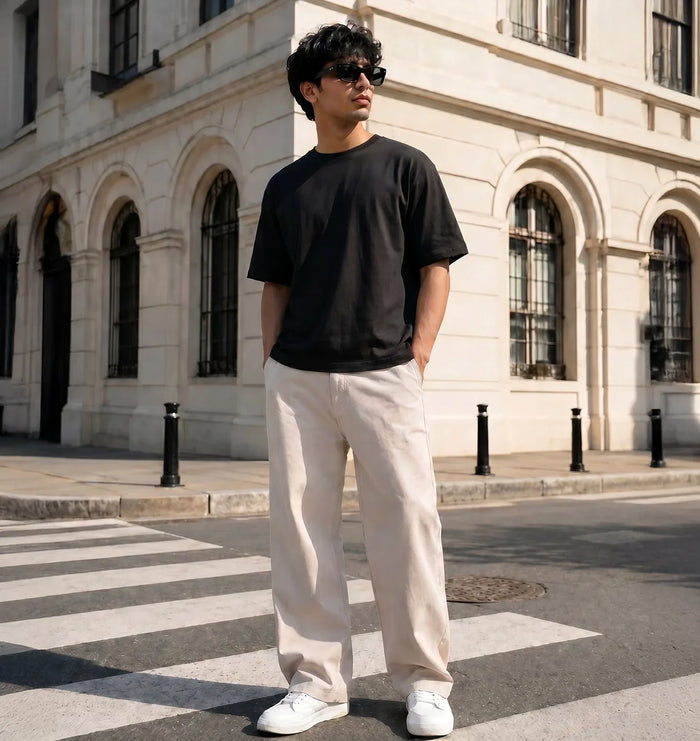
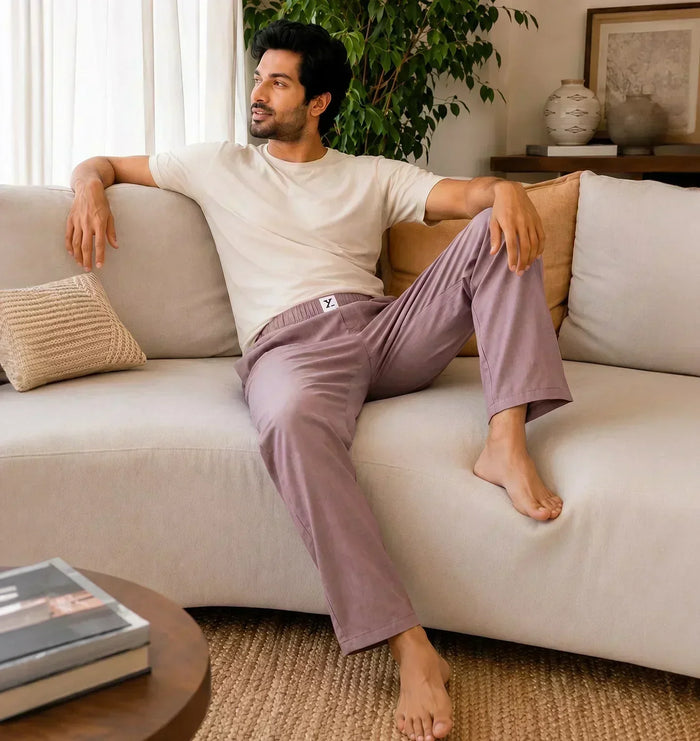
This is the thing nobody wants to say out loud in a country that still treats natural fibre as a moral category. Indian problems need Indian solutions. And the Indian solution is the XYXX zero pants that feels like you’re wearing nothing and moves with you rather than against you.
What a XYXX Zero pant with no weight actually feels like
The idea of a "zero" pant sounds like marketing speak, but it’s not. It's a description of good fabric that’s cut well and disappears into the ether. You forget what you're wearing. That's the whole trick.
The Zero pants are cut from fabric with a two-way stretch. At first, I'll admit I flinched at the idea of pants that could stretch. The material was a reminder of the jeggings I'd grown up hearing my mother complain about for being a sweat-box. This is not that. The XYXX zero pant is woven open and finished right, does what cotton cannot in this climate: it moves sweat away from the skin and pushes it to the surface, where even our stubborn air can eventually take it.
The weight is the other half. The XYXX zero pants sit on you like a second layer of skin. You can cross your legs on a rickshaw seat without the fabric staging a protest. You can walk from a meeting to lunch without your thighs filing a hr complaint.
Where they earn their keep
The long day is where most trousers quit on you.
Travelling in the zero pants is easy. These don't crease when you sit on a flight. For a job that keeps me moving between offices, airports, and cities that have no interest in my plans, the zero pants refuse to ever let me down.
And the office. The one place we still pretend that suffering is part of professionalism. It isn't. It never was. There's no award for the man whose thighs are stuck to his chair at 5 PM.
The honest pitch
I'm not going to tell you these pants will change your life. They will, however, stop your clothes from being another hurdle in a life filled with one too many challenges.
Try a pair. Retire the one that's been failing you since April. Listen to the man who’s learnt his lessons from one of the fashion capitals of the world.