

You pull the t-shirt out of the washing machine, hold it up, and something's off. The shape you liked isn't quite there anymore. The body hangs a little limper. The neckline sits wider than it did when you first tried it on in front of the mirror. It's not ruined, exactly. But it's not the tee you bought either.
You didn't do anything wrong. You washed it on a normal cycle, dried it the way you always do. But the fabric has quietly given up on holding its shape.
This is the part most men skip past when picking a tee: the fit you liked wasn't held together by the cut alone. It was held by the fabric underneath. And when that fabric can't recover from being stretched, washed, and worn through Indian summers on repeat, the fit you paid for slowly disappears. Nobody tells you this at checkout. But after three washes in Mumbai humidity, you can see it.
The problem isn't the washing machine. It's that most t-shirt fabrics were never built to hold their shape. They stretch under tension and stay stretched. That gap between "stretch" and "recovery" is exactly where a fabric called scuba fabric steps in. It's not new to textiles, but it's new to the way everyday menswear is being constructed. And once you understand what it does differently, you'll start looking at every tee in your wardrobe a little differently too.
What Is Scuba Fabric, and What Does It Actually Do?
You've probably come across scuba fabric in the context of women's bodycon dresses or structured blazers. But in a t-shirt? That sounds unusual.
How It's Built
Scuba fabric is a double-knit construction. That means two layers of yarn are interlocked during knitting, rather than looped in a single layer like the standard jersey cotton you'll find in most tees. This structure gives the fabric three things that regular cotton can't deliver at the same time: a noticeably smooth hand-feel, natural stretch without clinging, and the ability to retain its original shape after being pulled, worn, or washed.
Why "Shape Recovery" Is the Part That Matters
The ability to retain its original shape is what separates scuba fabric from almost every other tee fabric on the market. In textile terms, this is called recovery. Most tees can stretch. Very few can recover. Scuba does both, not because of a surface coating that washes off in three cycles, but because of how the fabric is structurally knitted. Think of it like the difference between a rubber band and a piece of string. Both can be pulled. Only one returns to where it started.
Why Can Every Tee Stretch but Almost None Hold Their Shape?
This is the question that reframes how you think about what's in your wardrobe.
The Stretch Side
Stretch is the easy part. Pull any cotton tee at the hem and it gives up its shape. That's just fiber yielding under tension. Even a ₹300 tee from a local market will stretch if you tug at it. No engineering required.
The Recovery Side
Recovery is where things fall apart. Does the fibre return to exactly where it started, or does it settle somewhere slightly looser each time? Regular cotton recovers poorly. After ten washes in, the neckline has stretched out just enough to sit differently. The hem creeps. The body elongates. This isn't a washing mistake. It's a fabric limitation. Pure cotton was never built to snap back.
What Changes with the Right Blend
The reason scuba fabric handles this differently is the blend composition. The XYXX Cotton-Rich Oversized T-Shirt uses 51% cotton, 31% polyester, and 18% elastomultiester (EME). EME is a modified polyester t-shirt fibre engineered specifically for elastic recovery. It works like elastane fabric but holds its dimensional stability better over time, meaning it doesn't loosen up after months of wear the way elastane sometimes can. Cotton brings softness. Polyester holds structure. EME delivers the snap-back.
Each fiber does one job. None of them are carrying weight they weren't designed for.
How the XYXX Cotton-Poly Oversized T-Shirt Puts Scuba to Work
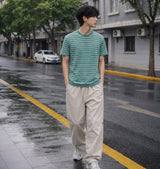
You're heading to a friend's place for a weekend screening. You grab the XYXX Cotton-Rich Oversized T-Shirt, layer it over joggers, and walk out. The dropped shoulders sit exactly where they should. The body drapes without clinging to your sides. The surface feels smooth against your skin, not rough or textured the way thicker cotton blends sometimes do. You look put-together without looking like you tried.
Fast-Forward Eight Weeks
Now run that scene forward by eight weeks. You've worn this tee on repeat, styled it with joggers, jeans, shorts, everything in your rotation. You've machine-washed it every single time. No special care, no delicate cycle, no overthinking.
The shape-retaining ribbed neckline still sits firm. No collar droop, no bacon-neck stretch. The scuba fabric still delivers that refined, smooth feel because the double-knit construction doesn't degrade the way a single jersey surface does. The ultra-breathable fabric blend keeps you cool even on 35°C afternoons, so this isn't a tee that trades comfort for structure. And the EME in the blend means the tee stretches with your movement and recovers to its original silhouette every single time.
This is the difference between an oversized t-shirt that was designed to look loose and one that was engineered to stay that way.
Does Scuba Fabric Work When It's 36 Degrees Outside?Does Scuba Fabric Work When It's 36 Degrees Outside?
The word "scuba" sounds insulating. And that's a fair concern. Traditional scuba fabric, the kind used in structured outerwear, can trap heat. But the XYXX version isn't built that way.
The cotton-rich blend (51% cotton) means the tee breathes the way you'd expect a best t-shirt for summer to. The polyester component adds moisture management without making it feel synthetic against your skin. And the double-knit structure, while denser than single jersey, is engineered for airflow rather than insulation.
So whether it's a 38°C afternoon in Hyderabad or a breezy evening out in Jaipur, the tee holds its ground. No clinging. No sweat patches sitting on the surface. It's the kind of breathable t-shirt that handles Indian weather across seasons without giving up the structure that makes it look sharp.
The fabric doesn't ask you to choose between cool and put-together. It does both.
The Fabric Is the Fit
An oversized silhouette is a design decision. But keeping that silhouette intact, wash after wash, wear after wear, that's a fabric decision. Scuba fabric gives the XYXX Cotton-Rich Oversized T-Shirt the stretch to move with you, the recovery to hold its shape wear after wear, and the structure to make every outfit look intentional rather than accidental.
If your oversized t-shirt keeps losing the shape you bought it for, the answer isn't gentler detergent or skipping the machine cycle. It's better fabric. Shop the XYXX Cotton-Rich Oversized T-Shirt collection.
FAQs
Does the XYXX Cotton-Rich Oversized T-Shirt actually hold its shape after multiple washes?
Yes. The tee is built on scuba fabric with 18% elastomultiester (EME), a fibre specifically engineered for shape recovery. Unlike single jersey cotton tees that stretch out and stay stretched, the XYXX Cotton-Rich Oversized T-Shirt retains its original silhouette through regular machine washes. The shape-retaining ribbed neckline stays firm, and the body doesn't elongate or sag over time.
How does XYXX make scuba fabric breathable enough for Indian weather?
By keeping the blend cotton-rich. The XYXX Cotton-Rich Oversized T-Shirt uses 51% cotton for airflow, 31% polyester for structure, and 18% EME (elastomultiester) for shape recovery. This isn't the thick, insulating scuba used in structured outerwear. XYXX engineered this as a breathable fabric blend that stays cool through 36°C afternoons without giving up the smooth feel and structure that scuba is known for.
Why did XYXX use scuba fabric in an oversized tee instead of regular cotton?
Because regular cotton can't do what this tee needs to do. Cotton is soft and breathable, but it loses structure with every wash. The oversized silhouette depends on the fabric holding a specific drape and drop. XYXX chose scuba fabric with EME because it stretches with your movement and recovers to its original shape afterward. Cotton handles the comfort. Scuba handles the longevity.
How is the XYXX Cotton-Rich Oversized T-Shirt different from other oversized tees in the market?
Most oversized tees use pure cotton or basic poly-cotton blends that lose their fit within weeks. The XYXX version is built on premium scuba fabric with a 51-31-18 blend of cotton, polyester, and elastomultiester. The double-knit construction delivers a smoother hand-feel, the shape-retaining ribbed neckline resists collar droop, and the ultra-breathable fabric build works across seasons without clinging.
Can I style the XYXX Cotton-Rich Oversized T-Shirt for both casual and semi-dressed-up looks?
Absolutely. The scuba fabric gives the tee a cleaner, more structured drape than a typical oversized cotton tee, which means it doesn't look sloppy when paired with denim pants or layered under an overshirt. Wear it with joggers for a weekend plan or with slim jeans and white sneakers for dinner. The smooth surface and consistent shape make it versatile enough to work across both ends.